This collaborative space allows users to contribute additional information, tips, and insights to enhance the original deal post. Feel free to share your knowledge and help fellow shoppers make informed decisions.
Deal History includes data from multiple reputable stores, such as Best Buy, Target, and Walmart. The lowest price among stores for a given day is selected as the "Sale Price".
Sale Price does not include sale prices at Amazon unless a deal was posted by a community member.
1. You want to learn about Strategic Manipulation. The book actually teaches about concealing intentions, manipulating others, and exploiting weaknesses in other for selfish purposes.
2. You want to use people for selfish gain.
3. Desire to become an effective narcissist.
Basically, it celebrates taking advantage of others for completely selfish reasons and treats morality as naivety. Sure, the author celebrates Machiavelli's The Prince as a pragmatic way to navigate life.
Basically, you can either control and coerce people - actually a form of weakness. Or, you can persuade people by growing your influence through character, hard work, and maturity. That latter takes time and effort many aren't interested in. Power through manipulation is the short cut that will give short term gains, but long term misery and loss.
This book is terrible if you want to have a meaningful, happy life. The choice is yours, choose wisely (or down vote if not).
If I don't like a book, I'll mostly be quiet about it. This and other Greene ones are the rare exceptions. This is not a good book. Now, I understand that he cautions against some of the "laws", but that's strategic rather than ethical. The author doesn't warn against the laws because they are mean or anti-social; he warns against misapplying them because doing so will make you lose.
Now, if you want to understand how some people who are narcissistic and/or who have anti-social personality disorder might sometimes view the world, it could be worth reading. Maybe check it out of a library than directly supporting the book this way. However, the book is still widely problematic.
Some main issues with the book are that it is fundamentally manipulative, deeply anti-social, and historically and psychologically inaccurate. A few notes about the inaccuracies. The author relies heavily on historical anecdotes to "prove" his laws. The problem is he cherry picks history to support his claims. Related to this is the huge issue of survivorship bias in the people and examples he refers to. Some people were successful using the tactics he describes, but millions to billions of people have not been (they are lost in the amnesia of history).
Another issue is that he transplants "lessons" from the past to today. That can be a great thing to do -- that's one of the main reasons to study history -- but Greene isn't contextualizing the past to the present. He assumes that what work for some people in some cases should apply now. The world is much different now than it was for many of the examples he covers. In today's corporate, legal, and social environments, the extreme ruthlessness that he describes and promotes usually leads to getting fired, canceled, or legally prosecuted. Yes, there are exceptions to that, but I don't think society thrives when people act like Greene is promoting.
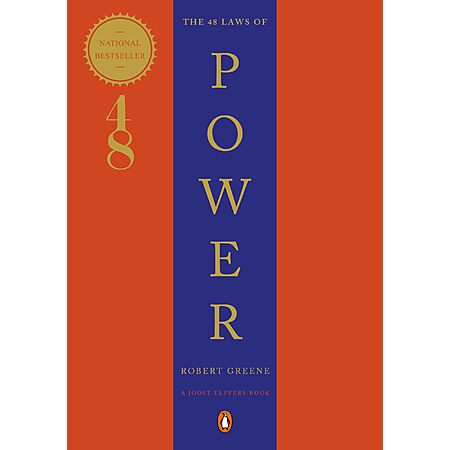
There is benefit to using this book to learn about how some people think and act, but Greene writes this book to teach people how to manipulate others. It's not a cautionary tale from him, it's his idea of a self-help book.
36 Comments
Sign up for a Slickdeals account to remove this ad.
Our community has rated this post as helpful. If you agree, why not thank MrBeauxjangles
This is book is great if:
1. You want to learn about Strategic Manipulation. The book actually teaches about concealing intentions, manipulating others, and exploiting weaknesses in other for selfish purposes.
2. You want to use people for selfish gain.
3. Desire to become an effective narcissist.
Basically, it celebrates taking advantage of others for completely selfish reasons and treats morality as naivety. Sure, the author celebrates Machiavelli's The Prince as a pragmatic way to navigate life.
Basically, you can either control and coerce people - actually a form of weakness. Or, you can persuade people by growing your influence through character, hard work, and maturity. That latter takes time and effort many aren't interested in. Power through manipulation is the short cut that will give short term gains, but long term misery and loss.
This book is terrible if you want to have a meaningful, happy life. The choice is yours, choose wisely (or down vote if not).
Our community has rated this post as helpful. If you agree, why not thank gamingdroid
Quote
from MrBeauxjangles
:
This is book is great if:
1. You want to learn about Strategic Manipulation. The book actually teaches about concealing intentions, manipulating others, and exploiting weaknesses in other for selfish purposes.
2. You want to use people for selfish gain.
3. Desire to become an effective narcissist.
Basically, it celebrates taking advantage of others for completely selfish reasons and treats morality as naivety. Sure, the author celebrates Machiavelli's The Prince as a pragmatic way to navigate life.
Basically, you can either control and coerce people - actually a form of weakness. Or, you can persuade people by growing your influence through character, hard work, and maturity. That latter takes time and effort many aren't interested in. Power through manipulation is the short cut that will give short term gains, but long term misery and loss.
This book is terrible if you want to have a meaningful, happy life. The choice is yours, choose wisely (or down vote if not).
It's also good knowledge to spot others doing it to you. The book also mentions this and cautions about doing it.
I've been tempted to read this, but the few times I tried, Robert Greene comes off as a pop psychology charlatan. Based on what others have said, I do think that learning how to manipulate some people, like for office politics reason can come in handy. Not sure I'd want to be that guy. But hey, if anyone has worked at mediocre American corporations, you know the mediocre, but shameless jabronis get to the upper management/director level positions in spite of their skills and abilities.
Our community has rated this post as helpful. If you agree, why not thank BrainDoc
If I don't like a book, I'll mostly be quiet about it. This and other Greene ones are the rare exceptions. This is not a good book. Now, I understand that he cautions against some of the "laws", but that's strategic rather than ethical. The author doesn't warn against the laws because they are mean or anti-social; he warns against misapplying them because doing so will make you lose.
Now, if you want to understand how some people who are narcissistic and/or who have anti-social personality disorder might sometimes view the world, it could be worth reading. Maybe check it out of a library than directly supporting the book this way. However, the book is still widely problematic.
Some main issues with the book are that it is fundamentally manipulative, deeply anti-social, and historically and psychologically inaccurate. A few notes about the inaccuracies. The author relies heavily on historical anecdotes to "prove" his laws. The problem is he cherry picks history to support his claims. Related to this is the huge issue of survivorship bias in the people and examples he refers to. Some people were successful using the tactics he describes, but millions to billions of people have not been (they are lost in the amnesia of history).
Another issue is that he transplants "lessons" from the past to today. That can be a great thing to do -- that's one of the main reasons to study history -- but Greene isn't contextualizing the past to the present. He assumes that what work for some people in some cases should apply now. The world is much different now than it was for many of the examples he covers. In today's corporate, legal, and social environments, the extreme ruthlessness that he describes and promotes usually leads to getting fired, canceled, or legally prosecuted. Yes, there are exceptions to that, but I don't think society thrives when people act like Greene is promoting.
There is benefit to using this book to learn about how some people think and act, but Greene writes this book to teach people how to manipulate others. It's not a cautionary tale from him, it's his idea of a self-help book.
Last edited by BrainDoc March 13, 2026 at 10:18 AM.
2
3
Like
Helpful
Funny
Not helpful
Sign up for a Slickdeals account to remove this ad.
Leave a Comment
Top Comments
1. You want to learn about Strategic Manipulation. The book actually teaches about concealing intentions, manipulating others, and exploiting weaknesses in other for selfish purposes.
2. You want to use people for selfish gain.
3. Desire to become an effective narcissist.
Basically, it celebrates taking advantage of others for completely selfish reasons and treats morality as naivety. Sure, the author celebrates Machiavelli's The Prince as a pragmatic way to navigate life.
Basically, you can either control and coerce people - actually a form of weakness. Or, you can persuade people by growing your influence through character, hard work, and maturity. That latter takes time and effort many aren't interested in. Power through manipulation is the short cut that will give short term gains, but long term misery and loss.
This book is terrible if you want to have a meaningful, happy life. The choice is yours, choose wisely (or down vote if not).
Now, if you want to understand how some people who are narcissistic and/or who have anti-social personality disorder might sometimes view the world, it could be worth reading. Maybe check it out of a library than directly supporting the book this way. However, the book is still widely problematic.
Some main issues with the book are that it is fundamentally manipulative, deeply anti-social, and historically and psychologically inaccurate. A few notes about the inaccuracies. The author relies heavily on historical anecdotes to "prove" his laws. The problem is he cherry picks history to support his claims. Related to this is the huge issue of survivorship bias in the people and examples he refers to. Some people were successful using the tactics he describes, but millions to billions of people have not been (they are lost in the amnesia of history).
Another issue is that he transplants "lessons" from the past to today. That can be a great thing to do -- that's one of the main reasons to study history -- but Greene isn't contextualizing the past to the present. He assumes that what work for some people in some cases should apply now. The world is much different now than it was for many of the examples he covers. In today's corporate, legal, and social environments, the extreme ruthlessness that he describes and promotes usually leads to getting fired, canceled, or legally prosecuted. Yes, there are exceptions to that, but I don't think society thrives when people act like Greene is promoting.
There is benefit to using this book to learn about how some people think and act, but Greene writes this book to teach people how to manipulate others. It's not a cautionary tale from him, it's his idea of a self-help book.
36 Comments
Sign up for a Slickdeals account to remove this ad.
Our community has rated this post as helpful. If you agree, why not thank BraveStep398
Our community has rated this post as helpful. If you agree, why not thank RepFree83
Our community has rated this post as helpful. If you agree, why not thank MrBeauxjangles
1. You want to learn about Strategic Manipulation. The book actually teaches about concealing intentions, manipulating others, and exploiting weaknesses in other for selfish purposes.
2. You want to use people for selfish gain.
3. Desire to become an effective narcissist.
Basically, it celebrates taking advantage of others for completely selfish reasons and treats morality as naivety. Sure, the author celebrates Machiavelli's The Prince as a pragmatic way to navigate life.
Basically, you can either control and coerce people - actually a form of weakness. Or, you can persuade people by growing your influence through character, hard work, and maturity. That latter takes time and effort many aren't interested in. Power through manipulation is the short cut that will give short term gains, but long term misery and loss.
This book is terrible if you want to have a meaningful, happy life. The choice is yours, choose wisely (or down vote if not).
Our community has rated this post as helpful. If you agree, why not thank gamingdroid
1. You want to learn about Strategic Manipulation. The book actually teaches about concealing intentions, manipulating others, and exploiting weaknesses in other for selfish purposes.
2. You want to use people for selfish gain.
3. Desire to become an effective narcissist.
Basically, it celebrates taking advantage of others for completely selfish reasons and treats morality as naivety. Sure, the author celebrates Machiavelli's The Prince as a pragmatic way to navigate life.
Basically, you can either control and coerce people - actually a form of weakness. Or, you can persuade people by growing your influence through character, hard work, and maturity. That latter takes time and effort many aren't interested in. Power through manipulation is the short cut that will give short term gains, but long term misery and loss.
This book is terrible if you want to have a meaningful, happy life. The choice is yours, choose wisely (or down vote if not).
Sign up for a Slickdeals account to remove this ad.
https://www.youtube.com/watch?v=_pd6H5o
Our community has rated this post as helpful. If you agree, why not thank BrainDoc
Now, if you want to understand how some people who are narcissistic and/or who have anti-social personality disorder might sometimes view the world, it could be worth reading. Maybe check it out of a library than directly supporting the book this way. However, the book is still widely problematic.
Some main issues with the book are that it is fundamentally manipulative, deeply anti-social, and historically and psychologically inaccurate. A few notes about the inaccuracies. The author relies heavily on historical anecdotes to "prove" his laws. The problem is he cherry picks history to support his claims. Related to this is the huge issue of survivorship bias in the people and examples he refers to. Some people were successful using the tactics he describes, but millions to billions of people have not been (they are lost in the amnesia of history).
Another issue is that he transplants "lessons" from the past to today. That can be a great thing to do -- that's one of the main reasons to study history -- but Greene isn't contextualizing the past to the present. He assumes that what work for some people in some cases should apply now. The world is much different now than it was for many of the examples he covers. In today's corporate, legal, and social environments, the extreme ruthlessness that he describes and promotes usually leads to getting fired, canceled, or legally prosecuted. Yes, there are exceptions to that, but I don't think society thrives when people act like Greene is promoting.
There is benefit to using this book to learn about how some people think and act, but Greene writes this book to teach people how to manipulate others. It's not a cautionary tale from him, it's his idea of a self-help book.
Sign up for a Slickdeals account to remove this ad.
Leave a Comment