Walmart has
10L Ozark Trail Polyester Backpack (Navy or Rose) for
$4.97. Select free store pick up where stock permits otherwise
shipping is free with Walmart+ (
free 30-day trial) or on orders of $35+.
- Note: Store pick up will vary by location and may not be available in all areas.
Thanks to Community Member
tunabreath for finding this deal.
Available colors:
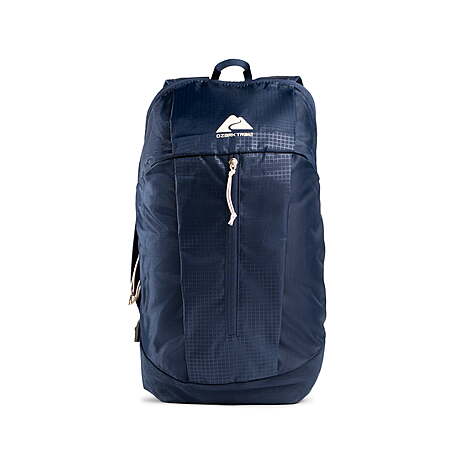
Features:- Compact 10-liter capacity is perfect for day trips or daily use
- Features a large main compartment for essential items
- Front zippered accessory pocket for storing small valuables
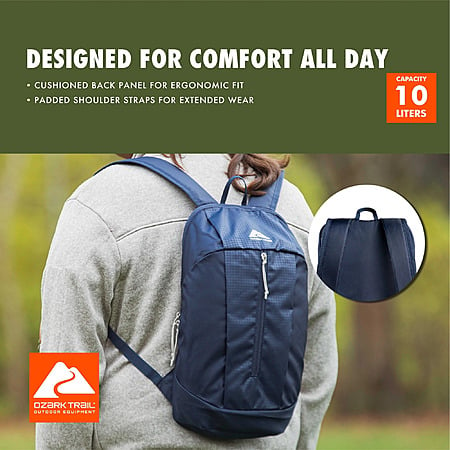
- Padded back panel and adjustable shoulder straps for a comfortable carry
- Top carry handle for easy lifting and storage
- Made from stylish and durable embossed polyester fabric
- Dimensions: 8.47" x 4.93" x 16.15"


 + Free Pickupat Walmart




Top Comments
Join The Conversation
Share your experience with the Slickdeals community
Share information with the community. Please follow our Community Guidelines and be kind!
18 Comments
Sign up for a Slickdeals account to remove this ad.
Our community has rated this post as helpful. If you agree, why not thank
Our community has rated this post as helpful. If you agree, why not thank
Our community has rated this post as helpful. If you agree, why not thank
Oh, you meant yes, metric is standard! down with inches? Well, yes, that's stupid too.
Sign up for a Slickdeals account to remove this ad.
The description of this product's width, length, and height is in inches, the first thing you want to know about a daypack, how it is going to fit on you. It's easy to calculate the volume from it - The volume of a rectangular object with dimensions 8.47 inches x 4.93 inches x 16.15 inches is approximately 674.6 cubic inches.
So you'd expect it to be given in cubic inches. But instead it gives it in a completely different measurement system, and instead of in cubics (like cubic centimeters), gives it in liters, further cutting the relationship to the spacial dimension. It's the equivelent to giving backpack sizes in gallons.
It tells you absolutely nothing, it's complete nonsense. I could have a 20 ft long backpack with VERY narrow width and breadth, and have the exact same volume. The first things you need are is it going to fit on you, what is the height compared to you, the width compared to your shoulders, etc. And anyone that has those dimensions can figure the volume out themselves. But if you have the volume, you can't figure out the height, width, and depth. You need the spacial dimensions.
This thing looks small in the picture. And seeing how I've bought 2 dozen or so backpacks that are larger and better material for about the same price, it is not a good price. Volume. it's just disguising that.
PS: My calculations show the volume of this is 674.6 cubic inches, but that would be 11 Liters, not 10. The description this product gives of itself is not accurate. I would guess that the length, height and depth is actually smaller than it claims on the product page, since it says it's only 10L. It's more than 10% off. And because it looks small in the pictures. Edit: Due to backpack's large slope in pictures
7 inches is pretty small across. I measured it against three different small backpacks I just happen to have sitting here empty because I'm rearranging rooms, all different brands and styles. All were 12.5-13" across, and all around 5-7 dollars, and all more truely rectangular - because it gave them more space inside.
This thing is small.
The description of this product's width, length, and height is in inches, the first thing you want to know about a daypack, how it is going to fit on you. It's easy to calculate the volume from it - The volume of a rectangular object with dimensions 8.47 inches x 4.93 inches x 16.15 inches is approximately 674.6 cubic inches.
So you'd expect it to be given in cubic inches. But instead it gives it in a completely different measurement system, and instead of in cubics (like cubic centimeters), gives it in liters, further cutting the relationship to the spacial dimension. It's the equivelent to giving backpack sizes in gallons.
It tells you absolutely nothing, it's complete nonsense. I could have a 20 ft long backpack with VERY narrow width and breadth, and have the exact same volume. The first things you need are is it going to fit on you, what is the height compared to you, the width compared to your shoulders, etc. And anyone that has those dimensions can figure the volume out themselves. But if you have the volume, you can't figure out the height, width, and depth. You need the spacial dimensions.
This thing looks small in the picture. And seeing how I've bought 2 dozen or so backpacks that are larger and better material for about the same price, it is not a good price. Volume. it's just disguising that.
PS: My calculations show the volume of this is 674.6 cubic inches, but that would be 11 Liters, not 10. The description this product gives of itself is not accurate. I would guess that the length, height and depth is actually smaller than it claims on the product page, since it says it's only 10L. It's more than 10% off. And because it looks small in the pictures. Edit: Due to backpack's large slope in pictures
#1
The dimensions provided, 8.47" x 4.93" x 16.15", correlate to 11L. However, that would be the case only if the backpack was a perfect rectangular prism.
As a simple example, take a block of wood that is 8.47" x 4.93" x 16.15". We can all agree that it has a volume of approximately 11L. Now take a saw and cut a corner of the wood block off. The new block of wood is now less than the original, so the volume will be less. But if you were to take general measurements of the new block, you'd still get 8.47" x 4.93" x 16.15"
#2
Backpacks' rated capacities in liters are NOT measured by using exterior length measurements. They are calculated by filling the backpack with little round balls of a uniform size. Once the backpack is full, the volume is calculated based on the number of balls that were able to be put into the backpack. This has the benefit of accounting for not only the odd shapes of backpacks, but also other factors like the thickness of the materials and the inner pockets/dividers.
#3
Backpacks are not normally named based on their dimensions. You are on SlickDeals.net. Search for "backpack", and look at the results. Now do the same at Amazon.com. You'll find that the 2 most common measurements used for describing backpacks are L (the carrying capacity) and a single inches measurement. The inches measurement refers to the maximum size laptop it will hold.
Yes, the descriptions on the pages for backpacks do normally list the approximate LxWxD measurements. And I agree it is very helpful. But you are incorrect when you say that "Giving the liter amount in title, as opposed to dimensions in inches is not a standard way to describe backpacks."
#4
Providing a measurement based on volume is likely chosen because it allows for simplifying to one value. If you look up "storage bins" on Slickdeals, you'll find that they are also normally listed based on volume. In the US, it is normally listed based on gallons or quarts. But it is still simplified in the products name or summary to that one volume measurement instead of all the dimensions.
#1
The dimensions provided, 8.47" x 4.93" x 16.15", correlate to 11L. However, that would be the case only if the backpack was a perfect rectangular prism.
As a simple example, take a block of wood that is 8.47" x 4.93" x 16.15". We can all agree that it has a volume of approximately 11L. Now take a saw and cut a corner of the wood block off. The new block of wood is now less than the original, so the volume will be less. But if you were to take general measurements of the new block, you'd still get 8.47" x 4.93" x 16.15"
#2
Backpacks' rated capacities in liters are NOT measured by using exterior length measurements. They are calculated by filling the backpack with little round balls of a uniform size. Once the backpack is full, the volume is calculated based on the number of balls that were able to be put into the backpack. This has the benefit of accounting for not only the odd shapes of backpacks, but also other factors like the thickness of the materials and the inner pockets/dividers.
#3
Backpacks are not normally named based on their dimensions. You are on SlickDeals.net. Search for "backpack", and look at the results. Now do the same at Amazon.com. You'll find that the 2 most common measurements used for describing backpacks are L (the carrying capacity) and a single inches measurement. The inches measurement refers to the maximum size laptop it will hold.
Yes, the descriptions on the pages for backpacks do normally list the approximate LxWxD measurements. And I agree it is very helpful. But you are incorrect when you say that "Giving the liter amount in title, as opposed to dimensions in inches is not a standard way to describe backpacks."
#4
Providing a measurement based on volume is likely chosen because it allows for simplifying to one value. If you look up "storage bins" on Slickdeals, you'll find that they are also normally listed based on volume. In the US, it is normally listed based on gallons or quarts. But it is still simplified in the products name or summary to that one volume measurement instead of all the dimensions.
Most of your message is what I already said in posts if you read them closer. The original post said 8.47" x 4.93" x 16.15", which is inaccurate. The product description says "optimal" dimensions. This isn't good english or true either. They mean "maximum" dimension.
I figured out the actual optimal dimensions based on keeping the volume and proportion the same - it's even smaller appearing.
I stand by everything I said. The backpack is very small. Not a good price, and people will be disappointed if they are thinking they are getting a standard sized backpack. Giving volume in metric hides how small this is, and calling the dimension in inches "optimal" isn't accurate either. Optimal for what?
I even compared it to three of mine own, which actually are more rectangular shaped. This is small, and overpriced compared to every daypack I've bought. Probably flimsy material too.
Edit: This is a 2.6 gallon backpack. Not enough for a full day of intense hiking if you could fill it all up with water.
The most common measurement I find on Walmart, where this deal is, is inches in one dimension, and inches in all dimensions. 60% or more. And that might be expected, because America is still not a metric country.
As predicted - in my first post, this has become an argument in metric is right! as opposed to my observation that this is a very small backpack, and the seller is disguising that fact by giving the volume in metric instead of the actual spatial dimensions in inches.
It's 7-8 inches big! More like 16.15 in × 5.33 in × 7.02 in.
Sign up for a Slickdeals account to remove this ad.
Note: I haven't tried this specific bag, but I use a bag of a similar size/design/price point for this purpose on most trips.
Join The Conversation
Share your experience with the Slickdeals community
Share information with the community. Please follow our Community Guidelines and be kind!